
When a storm damages your roof, you need more than a quick patch. You need a licensed roofing team that knows how to inspect the damage, protect your home, and recommend the right solution.
At IBC Roofing, we provide licensed storm damage services in Richmond, VA for homeowners dealing with hail or wind damage, roof leaks, fallen branches, and other storm-related roofing problems. If high winds lifted shingles, hail knocked granules loose, or heavy rain exposed a leak, we can inspect your roof, document the damage, and explain what needs to happen next.
Our goal is simple. We want to help you protect your home before a small roof problem turns into interior water damage, structural issues, or a larger replacement project.
Contractors, Certified - Licensed - Insured
Storm damage is not the time to gamble on an unlicensed crew, a temporary contractor, or someone who only shows up after severe weather. We are a licensed and insured roofing contractor serving homeowners in Richmond, VA, and that matters when your home is exposed.
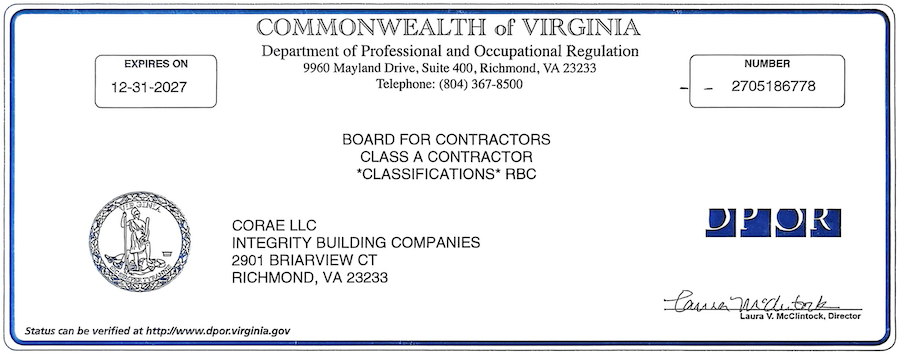
In Virginia, contractor licensing is handled through the Department of Professional and Occupational Regulation, also known as DPOR. Roofing contractors certified with the state, much following licensing requirements based on the size and scope of the work. Richmond also makes it clear that a city business license is not a substitute for a Virginia contractor license.
IBC Roofing operates under license number 2705186778, giving Richmond homeowners a clear way to verify who they are hiring before restoration work begins.
That protects homeowners. Licensed roofing companies are held to professional standards for business practices, qualifications, and accountability. Insurance is just as important because it helps protect the homeowner, the property, and the crew if something unexpected happens during the job.
At IBC Roofing, we understand how local weather affects roofing systems, how storm damage should be inspected, and how to fix the roof in a way that protects your home beyond the next rainfall.
Storm Roofing Repair Services
Some damage is obvious from the yard. Others are hidden until water starts entering the home.
We restore storm-related roof problems caused by hail, wind, heavy rain, falling branches, and sudden leaks. Whether the damage is limited to one section or spread across multiple roof areas, we start by identifying what happened and what needs to be fixed.
Hail Damage
Hail can bruise shingles, knock away protective granules, and shorten the life of your roof. Some hail damage is easy to miss, especially when the shingles are not cracked or broken from the ground view.
During an inspection, we look closely for bruising, granule loss, soft spots, and impact marks that may weaken the roof’s protective surface. If hail has compromised your roof, we explain what we found and whether repairing or replacing it makes the most sense.
Wind Damage
Wind damage is not always as simple as a missing shingle. Strong gusts can lift a shingle, break the seal underneath it, and allow it to settle back into place. From the yard, the roof may look fine. Up close, that shingle may no longer be sealed the way it should be.
Once the seal is broken, wind-driven rain can get underneath the shingle. That can expose the underlayment, fasteners, decking, and nearby shingles to moisture. During our inspection, we look for signs that shingles have shifted, creased, lifted, or lost their bond, even if they are still attached to the roof.
Debris and Fallen Branch Damage
Tree limbs and debris can puncture shingles, damage flashing, crush gutters, or create impact damage on the roof surface.
When debris hits the roof, we do more than remove what is visible. We inspect the affected roofing area, check the layers underneath, and fix the damaged section so the roofing can shed water properly again.
Leak Repair
Leaks are often the first problem homeowners notice. A ceiling stain, damp insulation, or water dripping during heavy rain may point to missing shingles, failed flashing, damaged pipe boots, or exposed roof decking.
At IBC Roofing, we track down the actual source of the leak instead of only treating the visible stain inside your home. That matters because water can travel before it shows up indoors. The leak may start several feet away from the stain you see on the ceiling.
Attic and Interior Clues
A proper inspection should not stop at the roof surface when there are signs of a leak. Water can enter through one area of the roof and travel before it becomes visible inside the home.
When needed, we look for interior clues such as damp insulation, darkened roof decking, water trails, ceiling stains, musty odors, and moisture around attic penetrations. These details help us understand whether the issue is isolated or whether damage has already affected the structure below the shingles.
A ceiling stain may look small, but the roof issue causing it could be several feet away. Finding the actual leak path is what allows the roof repair to solve the problem instead of covering up the symptom.
Insurance Documentation Support
When insurance may be involved, clear documentation matters. We help homeowners understand the insurance claim process and provide documentation of the damage found during the inspection.
That may include photos, notes, and a breakdown of the affected roof areas. The goal is to give you useful information while making sure the roof is properly protected, repaired, and ready for the next storm.
We do not decide insurance coverage. That is up to the insurance company. Our role is to provide clear roofing documentation so you have a better understanding of your roof’s condition.
What Richmond Homeowners Should Do After a Storm
Avoid climbing onto the roof yourself. Storm-damaged shingles, wet surfaces, loose branches, and hidden soft spots can make the roof unsafe.
Start by checking your home from the ground. Look for missing shingles, loose metal, damaged gutters, fallen branches, ceiling stains, or water near attic areas.
If water is actively entering the home, move belongings away from the leak if it is safe. Place a container under the dripping area and take photos of visible damage before anything is moved or cleaned up.
Then call a roofing contractor to inspect the roof before the damage spreads. A fast inspection can help determine whether your home needs a small fix, temporary protection, or a larger damage restoration plan.
How We Handle Storm Damage Roof Repairs
Our roof repair starts with helping you understand what the storm actually did to your roof. In Richmond, high winds, hail, falling branches, and heavy rain can create roofing problems that are not always visible from the ground.
A few missing shingles may be easy to spot. Lifted shingles, damaged flashing, bruised shingles, exposed fasteners, and small leak paths can be harder to see.
Our process is built to protect your home first. Then we identify the full scope of the damage before work begins. We inspect the roofing carefully, document what we find, provide protection when needed, and complete the roofing repair using the right materials and methods for your existing roof system.
The goal is not to rush into a quick patch that hides the problem. The goal is to make sure the damaged area is properly repaired, the surrounding roof is checked, and you understand what needs to happen next.
Step 1 Damage Inspection
The first step is a detailed roofing inspection. We check for visible and hidden signs of damage across the full roofing system.
That includes shingles, flashing, vents, pipe collars, ridge caps, valleys, gutters, fascia, and any areas where water could enter the home.
Damage does not always show up as an active leak right away. Wind can loosen shingles without tearing them off completely. Hail can bruise shingles and weaken their protective granules. Debris can damage flashing or create openings around roof penetrations.
If those issues are missed, water can slowly work its way under the roofing surface. During the inspection, we look at the affected areas and the overall condition of the roof. This helps us determine whether a focused fix is enough or whether the damage points to a larger roofing concern.
Step 2 Documenting the Storm Damage
Once the roofing is inspected, we document the damage clearly. This is important because roof damage can affect several areas, and homeowners need a clear record of what was found.
We may document missing shingles, lifted shingles, hail marks, damaged vents, torn flashing, exposed underlayment, interior water stains, or debris impact.
Clear photos and notes help create a more accurate plan. They also give you a better understanding of your roof’s condition.
This step is especially important when insurance may be involved. Good documentation can help support the claim process by showing where the damage occurred, what parts of the roofing were affected, and why repairing is needed.
Step 3 Emergency Tarping and Protection
If the storm created an active leak or exposed part of the roof, tarping protection may be needed before the full job can be completed.
In those situations, we can provide temporary tarping to help reduce further water intrusion and limit additional damage inside the home.
Tarping is not a permanent fix. It is a temporary protective measure used to cover vulnerable areas until the roof can be properly fixed.
This may be needed after shingles are blown off, a tree limb damages the roof, flashing pulls loose, or water is actively entering the attic or living space.
The priority is to stabilize the situation. Protecting the home quickly can help prevent soaked insulation, damaged drywall, ceiling stains, mold concerns, and more costly roofing replacement work later.
Step 4 Roof Repair
After the roofing is inspected, documented, and protected if needed, we begin the work.
The exact solution depends on the type and extent of the damage. Some repairs may involve replacing missing shingles, sealing or replacing flashing, repairing pipe boots, fixing ridge caps, or addressing damaged roof decking if water has reached the structure below.
A proper roof repair should restore protection while blending with the existing roof as closely as possible. That means using compatible materials, fastening them correctly, and making sure the surrounding area is secure.
It should not only address what came loose during the storm. It should also correct weak points that could lead to future leaks.
Once the work is complete, we check the repaired area to make sure the roof is sealed, stable, and ready to protect your home through the next storm.
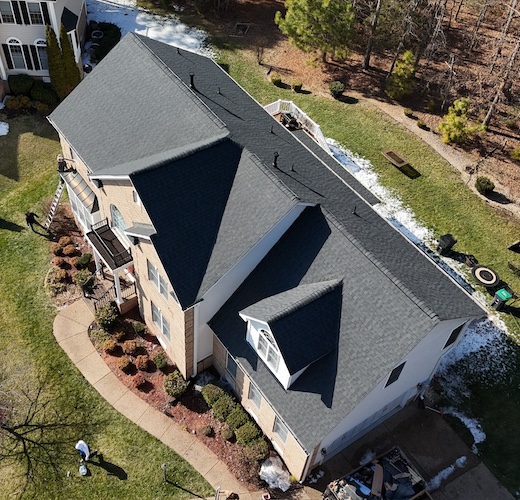
Full-Service Roofing for Richmond, VA Homes and Businesses
IBC Roofing is a full-service roofing company serving Richmond homeowners and businesses with inspections, storm damage support, roof repairs, and roof replacement. Our team works with several roofing materials, including asphalt shingles, metal roofing, slate roofing, and flat roofing systems.
That range matters after a storm because every roof type responds to damage differently. Wind can lift shingles, hail can bruise asphalt, debris can crack slate, and heavy rain can expose weak points on flat roofs. We inspect the full roofing system, explain what needs attention, and recommend the right solution for the property.
Whether you need a residential roof repair, weather protection, or a full commercial roof replacement, our goal is to fix the problem correctly and protect the structure long-term. We work on both residential and commercial roofs, so we understand how to approach different materials, building types, drainage needs, and installation details.
Protect Your Richmond Roof Before Needing a Roof Replacement
If your Richmond home was hit by wind, hail, heavy rain, or falling debris, do not wait for a small roof problem to become an interior leak. Our Richmond area services Henrico, Chesterfield, Midlothian, Mechanicsville, and beyond. Licensed to repair roofing on commercial and residential properties.
Contact IBC Roofing for a storm damage roof inspection. We will check the roofing, document what we find, and explain whether repairs, emergency roof protection, or roof replacement is the right next step. Call us today to learn more!