
When Richmond homeowners start researching a roof replacement, the conversation almost always comes down to the same two options. Asphalt shingles or metal roofing. Both are legitimate choices. Both have real advantages. And both have situations where they are clearly the wrong call.
Jed has been installing and repairing roofs across Richmond long enough to have a strong opinion on this comparison. What follows is IBC Roofing’s honest take on both roofing materials, including where each one performs, where each one falls short, and what IBC Roofing actually recommends when a homeowner asks.
The Question IBC Roofing Hears Most Often About Roofing Materials
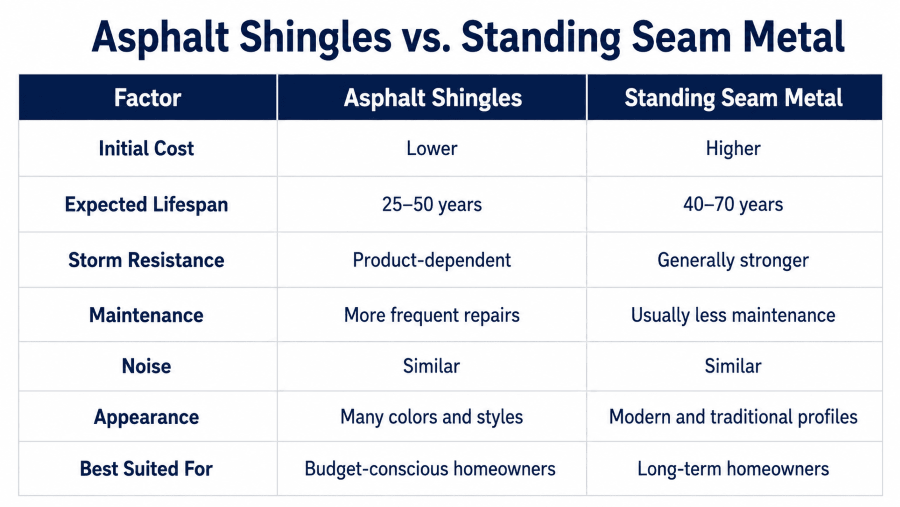
Most homeowners coming to IBC with this question have already done some research. They know metal costs more upfront. They know asphalt shingles are the most common choice in the neighborhood. What they want to know is whether the difference in cost is worth it and which material is actually going to protect their home better over time.
The honest answer is that it depends on budget, how long you plan to stay in the home, and what you are trying to accomplish with the investment. But for most Richmond homeowners who plan to stay long term, the comparison is not as close as the upfront price difference makes it seem.
What Asphalt Roofs Actually Deliver and Where They Fall Short
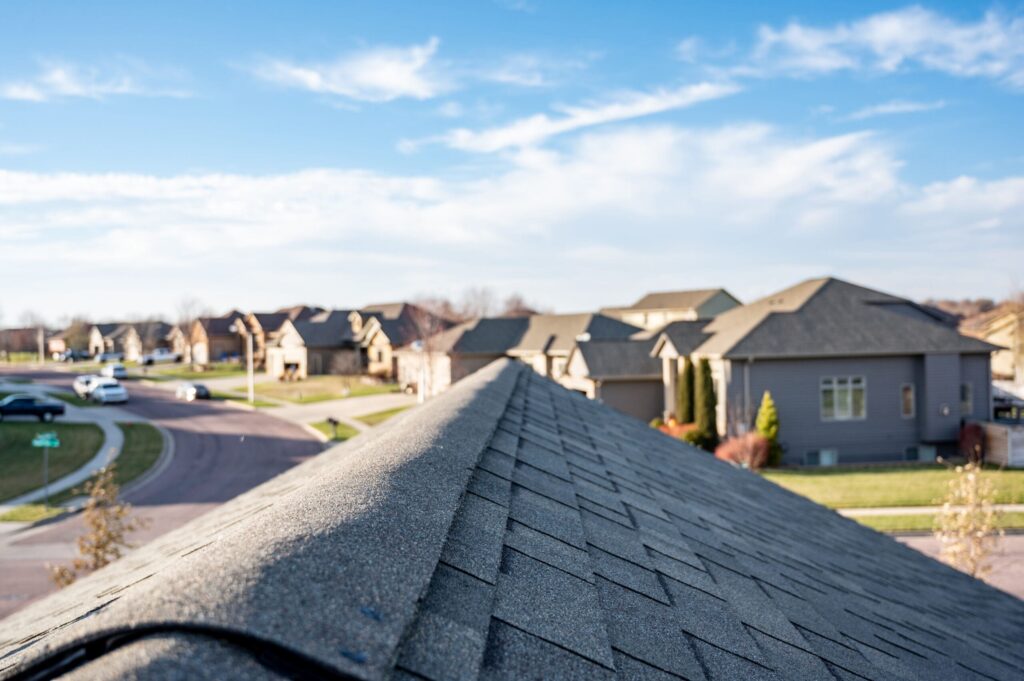
These are the most widely installed roofing material in the country for good reason. They are cost-effective, widely available, and when installed correctly by experienced roofers they provide solid protection for a predictable service life.
What Asphalt Does Well
- Accessible upfront cost that fits most residential roofing budgets
- Wide range of color and style options that work with most home styles in Richmond
- Established installation process that most roofing contractors know well
- Class A fire ratings available on qualifying shingle products and assemblies
- Straightforward repair process when individual shingles are damaged
Where Asphalt Falls Short
It starts degrading from the day it is installed. The granules on the surface of asphalt shingles protect the underlying material from UV damage. As those granules wear away, which happens gradually under normal conditions and rapidly after hail, the asphalt beneath is exposed to direct UV and begins breaking down faster.
Asphalt roofs are also more vulnerable in storm conditions than most homeowners realize. Hail knocks granules loose. High winds can cause shingles to lift at the adhesive strip, and once that seal breaks, wind can pull sections of the roof off in the kind of storms Richmond sees regularly. A shingle roof that carries a 30-year warranty may not deliver 30 years of real service if it goes through several significant hail or wind events.
The other issue is weight. A standard asphalt shingle installation adds significant load to the building structure. When asphalt shingles are installed over an existing layer, which happens more often than it should, that weight compounds. Jed has seen homes with multiple layers of old shingles where the accumulated weight caused the ridge to sag over time. That is a structural problem that goes well beyond a roofing issue.
What Metal Roofing Actually Delivers and What It Costs
Metal roofing generally costs more upfront than asphalt. For a standing seam metal roof, homeowners are typically looking at a bit more per square foot than a comparable asphalt installation. The exact number depends on the roof size, complexity, and the specific metal system being installed.
What that higher upfront number buys is a fundamentally different category of roofing product.
What Metal Delivers
- Service life of 40 to 70 years on a properly installed standing seam system
- Superior storm performance against hail, high winds, and severe weather
- Natural non-combustibility that makes achieving a
- Class A fire assembly more straightforward
- Lower long-term maintenance requirements than asphalt roofs
- Significantly lower lifecycle cost when the number of replacements is factored in
Metal roofs are some of the most energy-efficient options available in residential roofing. Metal sheds heat faster than asphalt after the sun goes down. Asphalt holds heat against the roof deck, which keeps attic temperatures elevated longer into the evening. Metal roofing with reflective pigment coatings can maintain a meaningfully lower surface temperature than black asphalt shingles even when both are dark colored.
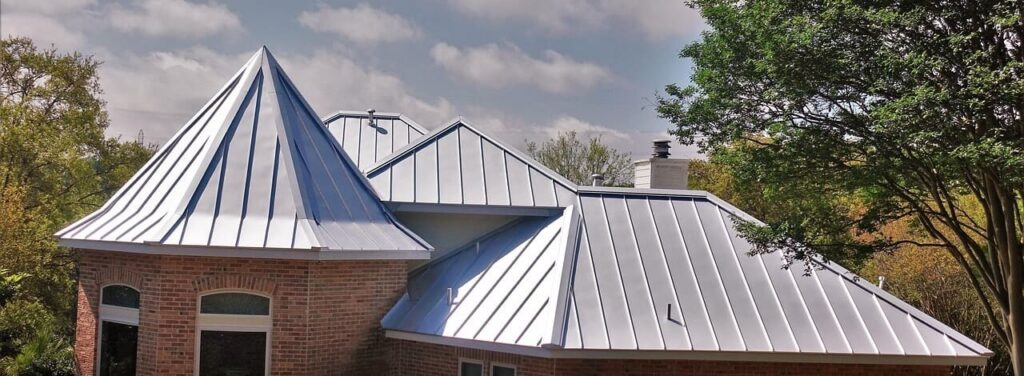
IBC installs standing seam metal roofing in Richmond. Standing seam uses concealed fasteners and a continuous locking seam that runs the length of the panel, eliminating the exposed fastener vulnerabilities that affect other metal systems. It is one of the most durable metal roofing configurations available for residential and commercial applications.
How Asphalt and Metal Roofs Hold Up in Richmond's Storm Season
Richmond sees its share of significant weather. Hail, high winds, and occasional ice events all test roofing systems in ways that are relevant to this roofing comparison.
Hail Performance
Hail damage on asphalt shingles is often severe enough to justify full replacement. A significant hail event strips granules across the full roof surface, accelerating UV degradation from every impact point forward. The damage may not cause an immediate leak but it dramatically shortens the remaining service life of the affected shingles.
Hail damage on a metal roof is typically cosmetic. It may dent the surface but it does not compromise the roof’s ability to shed water or protect the building below. The metal is not losing the protective layer that asphalt shingles depend on. It is taking a hit and continuing to perform.
Wind Performance
Asphalt shingles rely on an adhesive strip and nails to stay in place during high wind events. When that adhesive strip fails, shingles lift. When shingles lift, wind gets underneath and can pull off sections of the roof in a way that escalates quickly during a storm.
Standing seam metal roofing is mechanically fastened and locked at the seam. There is no adhesive strip to fail and no exposed fastener to back out. The panel is held down by clips that allow for thermal movement while maintaining the structural connection to the roof deck.
Ice and Snow
Metal sheds ice, sleet, and snow better than asphalt. The smooth surface of a metal roof allows snow and ice to slide off more readily, reducing the load that accumulates during winter weather events. Asphalt shingles hold snow and ice longer, which increases the risk of ice dam formation at the eave.
The Real Cost of Both Materials Over Time
This is where the upfront price comparison breaks down as a decision-making tool. Comparing the cost of an asphalt roof to a metal roof without factoring in lifespan is like comparing the cost of one tank of gas to filling up for a full year.
The Lifecycle Math
A standard asphalt roof in Richmond may last 20 to 50 years under normal conditions. A significant hail event can shorten that considerably. Over a 50-year period, a homeowner with shingles may replace the roof two or three times.
Standing seam metal roofs, installed correctly, can last 50 to 70 years. That is one purchase over the same period where asphalt requires multiple replacements. When the cumulative cost of those asphalt replacements is added up and compared to the single cost of the metal roof, the metal is often less expensive in total.
A simple calculator exercise makes this clear. If an asphalt roof costs a certain amount and needs to be replaced twice over 50 years, the total cost is three times the original installation. A metal roof that costs more upfront but is installed once over that same period may come out ahead on total cost before the 50-year mark.
The pros of metal roofing on a lifecycle basis are significant. One roof versus three. One installation disruption versus three. One warranty conversation versus three.
Energy Efficiency: What Is True and What Is Exaggerated
There are inflated claims in the metal roofing market around energy efficiency. Jed is direct about this. Claims of 30 percent reductions in heating and cooling costs from metal roofing alone are not accurate and homeowners should be skeptical of any contractor making that argument.
What is true is that metal roofing is among the most energy-efficient choices available compared to asphalt under the same conditions. Metal roofs are one of the better performers on solar reflectance. Asphalt holds heat. Metal releases it. In a Richmond summer that difference is real but it is measured in a few percentage points on the energy bill, not dramatic savings that pay for the roof upgrade on their own.
The energy benefit of metal roofs are a contributing factor in the overall value case, not the headline argument. The headline argument is durability, storm resistance, and lifecycle cost.
Why Metal Roofing Is Easier to Live With Long Term
Asphalt requires ongoing attention. Shingles crack, curl, and lose granules. Individual shingles blow off in storms and need replacement. Granule loss in gutters is a regular indicator that the roof is aging. Over a 20-year roof lifespan, maintenance is a recurring cost and a recurring conversation.
A properly installed standing seam metal roof requires significantly less ongoing maintenance. The primary maintenance items are keeping debris off the roof surface and ensuring gutters are clear so water moves away from the building correctly. The roof itself does not shed granules, does not curl, and does not degrade in the same incremental way that asphalt roofing does year over year.
For homeowners who want to install a roof and not think about it again for decades, metal is the easier long-term choice by a significant margin.
Weight and Structure: What Multiple Asphalt Layers Do to a Home
Asphalt shingles are heavier than most homeowners realize. A full asphalt shingle installation can add significant weight to the roof structure. When a second layer of shingles is installed over an existing layer, that weight doubles. Some homes end up with three layers before anyone decides a full tear-off is necessary.
Aluminum and steel standing seam panels are significantly lighter than asphalt shingles. That weight difference reduces the structural load on the building and eliminates the compounding weight problem that comes with asphalt layering. For older homes in Richmond where the roof structure may not have been designed for the load of multiple layers, the weight advantage of metal is not a minor detail. It is a structural consideration.
Why Metal Roofs Have a Natural Fire Resistance Advantage
Metal is non-combustible. That is the starting point for the fire resistance conversation. Asphalt shingles can achieve a Class A fire rating through the right product and assembly, but they do so through the combination of materials rather than the inherent properties of the shingle itself.
A standing seam metal roof with the correct underlayment and installation details achieves a Class A assembly through a system where the primary roofing material does not burn. For Richmond homeowners in areas with wildfire risk or who simply want the strongest fire resistance available, metal is the more straightforward path to that protection.
How to Install the Right Roof for Your Budget and Goals
The installation decision comes down to two questions. How long do you plan to stay in the home and what is your budget for this project?
If you plan to stay in the home for 20 years or more and the budget allows for it, metal roofing is the stronger investment. One installation, better storm performance, lower maintenance, and a service life that will likely outlast your time in the home.
If budget is the primary constraint, the best asphalt option IBC recommends is the CertainTeed Landmark Pro. It is a premium architectural shingle that outperforms standard asphalt shingles on durability, warranty terms, and storm resistance. It is not metal. But among asphalt options it is the product Jed reaches for when a homeowner needs the best shingle roof available at a fair price point.
What IBC Recommends for Most Richmond Homeowners
IBC’s recommendation is metal roofing for homeowners who plan to stay in the home long term and can accommodate the upfront investment. Standing seam metal roofing installed correctly in Richmond will outlast the mortgage, handle the storms the area sees regularly, and require significantly less attention over its service life than asphalt shingles.
For homeowners where budget drives the decision, CertainTeed Landmark Pro is IBC’s asphalt recommendation. It is the strongest performing shingle roof option available and the one Jed trusts when a homeowner needs a quality installation.
Stone-coated metal is another option worth knowing about for homeowners who want metal performance with a more traditional appearance. It offers the durability of metal with a surface texture that reads more like conventional shingles from the street.
What IBC does not recommend is choosing the cheapest asphalt option available to save money upfront. Budget shingles perform like budget products. The savings on the front end rarely justify the shorter service life and reduced storm performance on the back end.
Which Shingle Roofs and Metal Options Make Sense for Your Home
The right answer depends on your home, your plans, and your budget. Both asphalt and metal roofing have a place in IBC’s work across Richmond. What changes is which one is right for your specific situation.
IBC offers free estimates on both asphalt and metal roofing in Richmond and the surrounding area. As a CertainTeed-certified and BBB Accredited contractor, our team brings verified product knowledge and an established commitment to ethical business practices. Jed will come out, look at your roof, understand your goals, and give you an honest recommendation on which direction makes the most sense, including the specific product and what the installation would involve.
Call IBC Roofing at (804) 717-7663 to schedule your free estimate.