
Replacing an aging roof can increase your home’s value, but you should not expect to recover every dollar you spend. The bigger financial benefit may come from removing a problem that could lower the sale price, create buyer concerns, or become a negotiating point after an inspection.
At IBC Roofing, we have inspected Richmond homes both before they were listed and during active real estate transactions. Sometimes we find an aging roof that still has years of useful life. Other times, the roof needs repairs or replacement before it becomes a larger problem during the sale.
The key is knowing which situation you are dealing with.
How Much Value Does a New Roof Add?
The 2025 Cost vs. Value Report estimated that an asphalt shingle roof replacement recouped about 68% of its cost nationally through added resale value. In the South Atlantic region, which includes Virginia, the estimated return was 69.9%.
That means a roof should not be treated like an investment where spending $20,000 automatically adds $20,000 to the home’s sale price.
There is another side to the calculation, though.
A deteriorated roof can become something buyers subtract from what they are willing to pay. We have seen larger roofing projects turn into negotiations where buyers want the expected cost of replacement reflected in the purchase price.
In those situations, completing the roof before listing may put the seller in a stronger position. Instead of selling a home with a looming expense, they are selling one with a major project already completed.
What Determines How Much Value a New Roof Adds?
There is no universal dollar amount because every house and roof is different.
Several factors have a bigger impact than roof age alone.
Condition of the Existing Roof
Replacing a roof with active leaks, widespread deterioration, or significant damage usually has a different financial impact than replacing a functional roof with years of life remaining.
This is why an inspection should come before the replacement decision.
Remaining Roof Life
An older roof does not automatically need replacement.
We regularly see roofs around 20 years old that still have several years of useful life remaining. We have even seen a shingle roof rated around 25 years continue performing for roughly 30 years because it was maintained well.
If we believe the roof still has another five years of useful service, our recommendation may simply be to maintain it rather than replace it unnecessarily.
Installation and Repair Quality
Quality matters just as much as age.
We have seen a home go through the sales process with a poorly completed roof repair. Because the house remained on the market for an extended period, the repair eventually failed and started leaking.
The seller then had to hire another roofing contractor and pay for the problem a second time.
A cheap repair does not create value if the buyer inherits the same problem.
The Local Real Estate Market
A roof that buyers overlook in a competitive market may become a major negotiating point when buyers have more choices.
That is why sellers should consider the roof alongside the condition of comparable homes in their area.

Does Roofing Material Affect Home Value?
Yes, but a more expensive roofing material does not automatically produce a better return.
The 2025 Cost vs. Value Report estimated a 69.9% cost recovery for asphalt shingle replacement in the South Atlantic region, compared with 56.5% for metal roofing. Metal produced a higher estimated resale value, but its much higher installation cost reduced its percentage return.
That distinction matters.
Metal roofing may offer durability and a different appearance, but installing a premium roofing system purely to increase resale value may not make financial sense.
For many Richmond homes, a properly installed architectural shingle roof can provide the combination of appearance, protection, warranty coverage, and replacement cost that makes sense for the property.
The best roofing material for resale is usually the one that fits the house, neighborhood, budget, and expectations of buyers in that market.
How Does a New Roof Affect a Home Appraisal?
A new roof can improve how the overall condition of a property is viewed, but an appraiser does not simply add the roof replacement cost to the home’s value.
Fannie Mae appraisal guidance requires appraisers to consider the condition and quality of property improvements. Needed repairs, deterioration, and other adverse conditions must also be reflected in the appraisal.
That means the condition of the roof matters.
A recently installed roof can remove a major deferred-maintenance concern. An aging roof with visible problems can do the opposite.
The actual value adjustment depends on the property and comparable sales in the local market.
This is another reason replacing a perfectly functional roof just to receive a higher appraisal is not always a good strategy.
Should You Replace Your Roof Before Selling?
Sometimes. But the decision should start with the condition of the roof rather than its birthday.
The National Association of Realtors’ 2025 Remodeling Impact Report found that 37% of Realtors recommended new roofing as a project sellers should complete before listing. Realtors also reported increased buyer demand for new roofing, with 43% seeing increased demand during the previous two years.
That does not mean every seller should immediately schedule a replacement.
IBC Roofing has inspected Richmond homes preparing for sale where the roof only needed relatively minor work.
Common findings include:
- worn or damaged pipe collars
- missing shingles
- maintenance around chimneys
- isolated flashing concerns
- small repair areas
Correcting those problems can often bring an otherwise functional roof back into good condition without replacing the entire system.
When Roof Repair May Be Enough
If the roof has meaningful service life remaining and the problems are isolated, repair may make more sense.
For example, replacing a damaged pipe collar or a few missing shingles is very different from repairing widespread deterioration across the roof.
The repair also needs to be done correctly.
A poorly assembled patch may temporarily hide a problem, but that problem can return during the sales process. At that point, a small roofing issue can become a buyer-confidence issue.
When Replacement Makes More Sense
Replacement deserves serious consideration when:
- the roof has widespread deterioration
- repairs are becoming frequent
- active leaks are occurring in multiple areas
- significant portions of the roof are failing
- the remaining service life is limited
- buyers are likely to treat the roof as an immediate expense
The goal is not to install a new roof simply because you are selling.
The goal is to determine whether the existing roof will help or hurt the transaction.
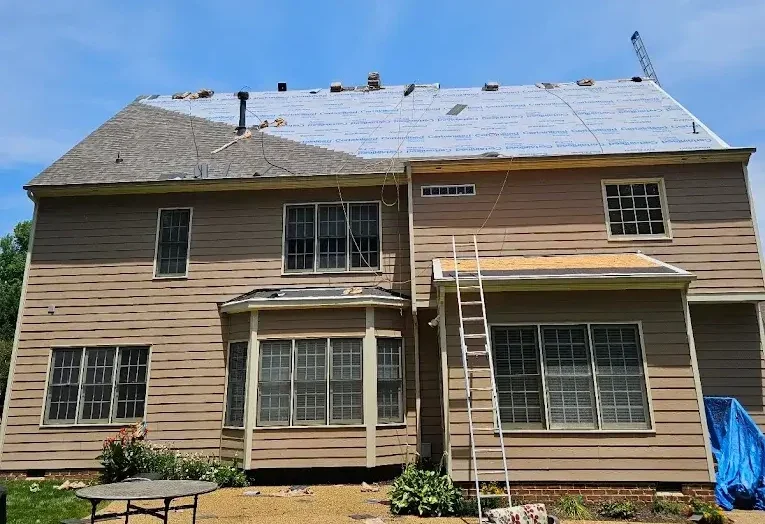
Replace the Roof or Offer the Buyer a Credit?
This is where sellers sometimes lose more money than expected.
Instead of replacing an aging roof before listing, a seller may decide to leave it for the next homeowner and offer a credit at closing.
That can work.
However, we have also seen larger roofing projects become part of purchase negotiations. Once buyers believe they will need to replace the roof soon after moving in, they often begin negotiating around that future expense.
The final reduction in the sale price may not match what the seller would have actually paid a roofing contractor.
In some situations, the homeowner could have replaced the roof beforehand, marketed the property with a new roofing system, and kept more of the home’s sale value.
Before automatically offering a credit, get an actual roofing inspection and replacement estimate. Then you know what the project really costs before entering negotiations.
How an Old or Damaged Roof Can Affect a Home Sale
An old roof and a failing roof are not the same thing.
That distinction becomes important when a home is being sold.
IBC Roofing has inspected homes on behalf of sellers preparing to list and buyers considering a purchase. Often, the inspection reveals relatively normal maintenance issues that can be corrected without replacing the roof.
Occasionally, however, we find a roof that has reached the point where replacement should be discussed.
A buyer discovering that after making an offer may:
- request repairs
- request a replacement
- negotiate a credit
- lower the offer
- ask for additional inspections
- reconsider the purchase
The roof can also affect how the property’s overall condition is viewed during appraisal. Fannie Mae requires apparent deterioration and needed repairs to be reported as part of the appraisal process.
This is why finding roof problems before listing is usually better than discovering them halfway through the transaction.
You have more control over the repair, contractor, price, and timeline.
Can a New Roof Help Your Home Sell Faster?
A new roof can make a property more attractive to buyers, but there is no reliable rule saying a new roof will remove a specific number of days from the market.
What it can do is remove uncertainty.
A buyer comparing two similar homes may see a recently replaced roof as one major expense they will not need to handle shortly after moving in.
That matters because buyers increasingly care about property condition. The 2025 Remodeling Impact Report ranked new roofing among the projects with the strongest increase in buyer demand, according to Realtors surveyed.
A new roof can also give the seller something concrete to show buyers:
- installation date
- roofing material
- contractor information
- manufacturer warranty
- workmanship warranty
- maintenance expectations
Instead of asking, “How much longer will this roof last?” the buyer knows exactly what was installed.
That can make the roof one less objection standing between the buyer and the house.
Does a Transferable Roof Warranty Add Value?
A transferable warranty can make a recently replaced roof more attractive because the coverage may continue after the property changes ownership.
IBC Roofing installs CertainTeed roofing systems that may qualify for enhanced manufacturer warranty coverage.
CertainTeed currently states that eligible SureStart PLUS warranties can transfer to a subsequent homeowner. Its current published terms list 3-Star coverage as fully transferable for 15 years and 4-Star and 5-Star coverage as fully transferable for 20 years, subject to the manufacturer’s requirements and limitations.
That can be useful when selling a house only a few years after replacing the roof.
Instead of simply telling the buyer the roof is newer, the seller may be able to provide documentation showing that qualifying manufacturer protection can follow the roof to the next owner.
IBC Roofing’s own workmanship warranty is separate from the manufacturer warranty. Transferability of IBC coverage is handled on a case-by-case basis, so homeowners should confirm their specific coverage before representing it as transferable during a sale.
Is Roof Replacement Worth It Before You Sell?
The answer depends on what is currently on the house.
If your roof is performing well and still has several years of useful life, replacing it solely because you plan to sell may not provide the best return.
If the roof only needs a few repairs, complete those repairs correctly and maintain the system.
If the roof is near failure or is likely to become a major negotiation point, replacement may give you more control over the expense and put the home in a better position when it reaches the market.
That is why our recommendation is to start with an inspection rather than assuming you need a new roof.
IBC Roofing works with homeowners, buyers, and real estate professionals throughout the Richmond area to evaluate roof condition before and during real estate transactions. We can identify necessary maintenance, document repairs, estimate remaining roof life, and recommend replacement when the condition truly calls for it.
If you are preparing to sell your Richmond home and are unsure whether the roof needs repair or replacement, contact IBC Roofing for a professional roof inspection before putting the house on the market.