
At IBC Roofing Richmond, we look at the condition of the shingles beneath the discoloration. We check granule coverage, damaged edges, flashing, and drainage before explaining the next step. If you send us a photo of a dark area, that gives us a starting point. The inspection tells us what is happening at the roof surface.
What Causes Dark Streaks on Asphalt Shingles?
Algae Stains That Spread Down the Roof
A common cause of brown or black roof streaks is Gloeocapsa magma, often called blue-green algae. Its dark pigment changes the roof’s appearance, and staining develops where conditions favor growth. The useful question for your roof is whether those streaks cover an otherwise sound shingle surface. During our shingle inspections, we evaluate granule loss and look for curling, cracks, and damaged edges. Those findings help us separate an appearance concern from material deterioration.
Dirt, Soot, and Debris Deposits
The starting point of a stain gives us useful information. A mark beneath a chimney calls for checking a different area than discoloration under an overhanging tree. Consider a dark mark running down from the side of a chimney. The assessment needs to address the deposit and the surrounding flashing. Our team checks chimney flashing for deterioration, visible openings, and signs of earlier repairs. If you also have a ceiling stain nearby, tell us where it is and when it appears. Exterior discoloration and an interior leak require their own checks. We need to establish the source of each before recommending work.
Granule Loss That Exposes Dark Asphalt
Mineral granules protect the asphalt coating on a shingle. When granules wear away, the exposed asphalt creates a dark patch and becomes more vulnerable to weathering. This is where a closer view matters. A photo taken from the driveway might show a black area without revealing whether the surface is stained or bare. We evaluate the granule coverage and the surrounding shingles for other deterioration.
Cleaning does not rebuild that protective surface. Loose granules also need context. Some shedding is expected after a new roof is installed. If you find granules near a downspout, tell us the roof’s approximate age and whether the amount has changed. We can assess that observation alongside the actual shingle condition.
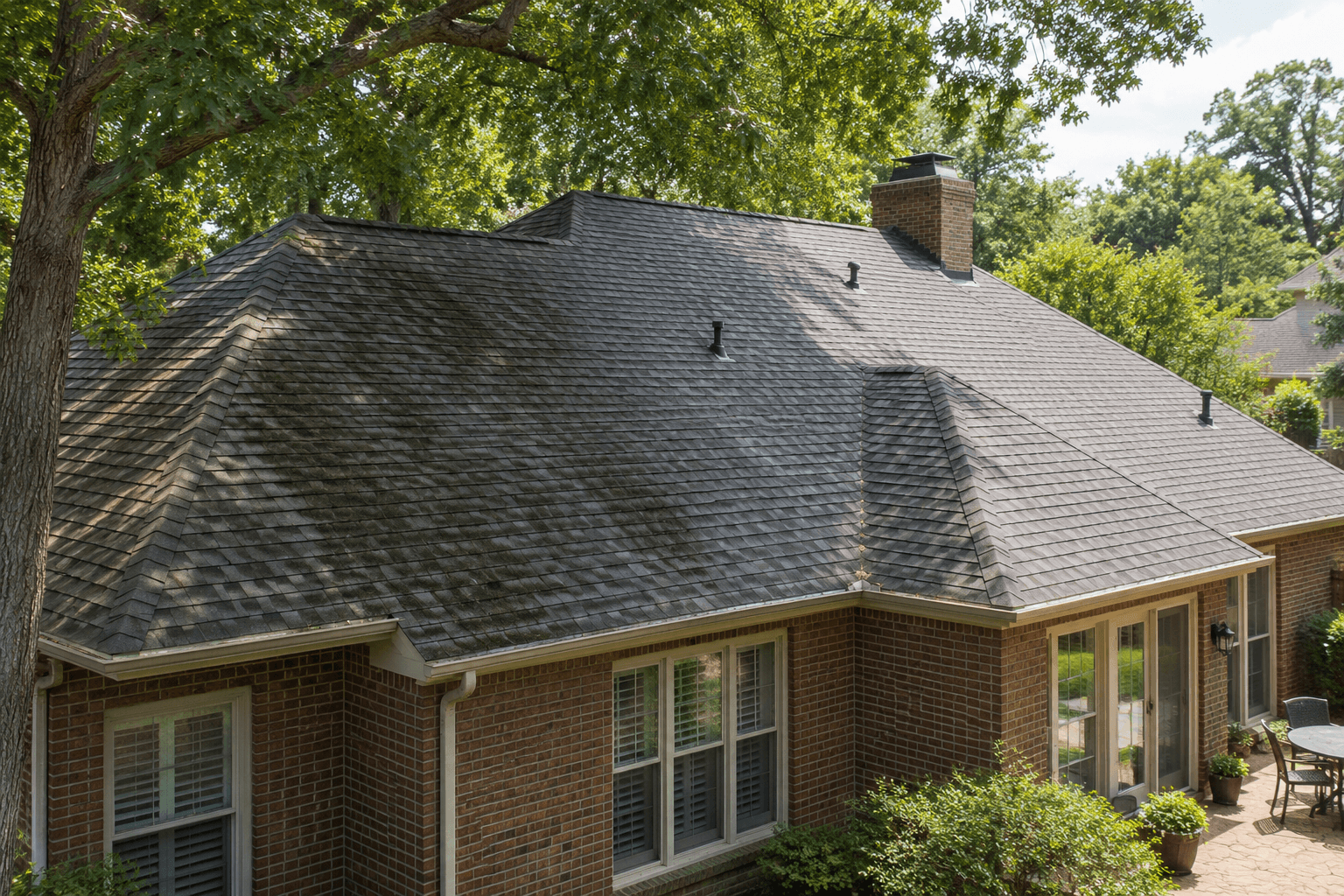
How To Tell Algae, Dirt, and Shingle Wear Apart
Take photos from the ground and send them to us before your inspection. Include a wider view showing the affected slope. A close crop alone leaves out nearby trees, chimneys, and roof transitions that help explain the mark’s location.
These are clues to share with us. They do not confirm the cause from the yard. Avoid scraping or brushing a spot to see what comes off. That risks disturbing the surface we need to evaluate. Leave roof access and close inspection to trained professionals.
Why Some Richmond Roof Slopes Stain More Than Others
Shade and moisture affect roof growth. North-facing slopes generally receive less direct sunlight, and overhanging branches add shade and collect debris. Think of a Richmond home with mature trees behind it. Its rear slope has dark streaks, while the front looks cleaner. For that situation, the inspection needs to account for exposure as well as material condition. We still need to check both slopes. A cleaner appearance does not establish that the front shingles are in better condition, and heavier staining does not establish a replacement deadline for the rear.
Do Black Roof Streaks Mean You Need a New Roof?
When Staining Is the Main Concern
Algae staining alone does not establish a need for replacement. If our inspection finds sound shingles beneath the discoloration, we can discuss maintenance and manufacturer-approved cleaning considerations. For example, consider a roof with dark streaks but intact granule coverage and no damaged shingles in the affected area. The homeowner’s concern is appearance. A replacement recommendation would need supporting evidence elsewhere on the roof. Our job is to explain the condition we find and how it relates to the work you are considering.
When Dark Areas Come With Shingle Damage
A roof with bare asphalt patches, cracked shingles, and damaged edges presents a different problem. Cleaning would leave those defects in place. The extent of the damage matters. A localized issue calls for assessing whether a roof repair is practical. Widespread deterioration calls for a broader discussion about the roof’s condition and replacement options. We inspect for these differences before recommending a scope of work.
When There Is Moss or an Interior Leak
Raised moss deserves attention because its buildup can lift shingle edges and affect water movement. It requires a different assessment than flat discoloration. An active leak also changes the priority. If you have dripping water, a growing ceiling stain, or damp insulation, tell us when you request the inspection. We need to investigate the moisture concern alongside the exterior staining.
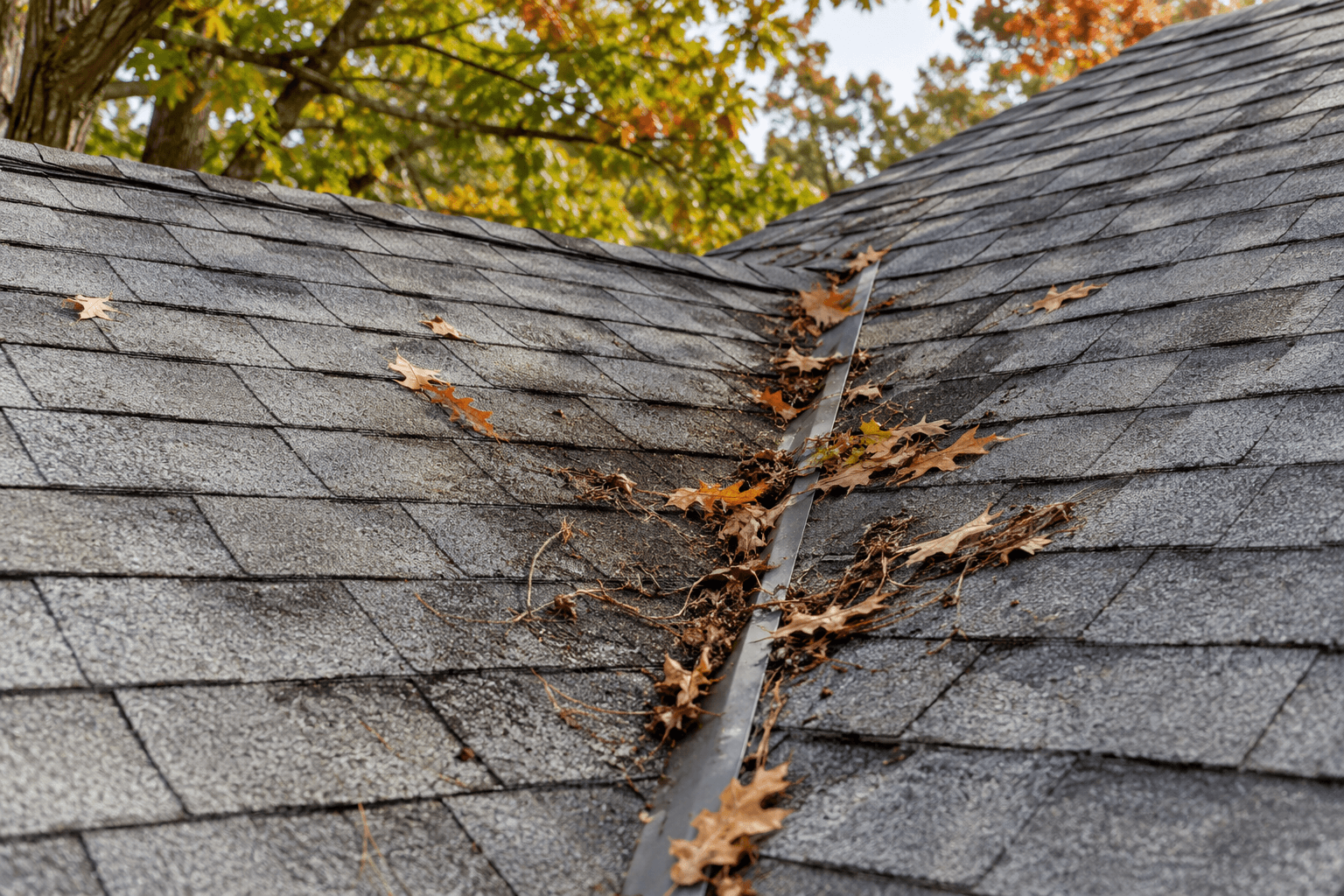
What IBC Checks During a Stained-Roof Inspection
Our Richmond roof inspections include roofing materials, flashing, drainage, and accessible areas relevant to the concern. For a stained shingle roof, these checks help establish what needs attention.
Shingle Surface and Edges
We evaluate granule loss and look for missing, lifted, curled, cracked, or loose shingles. We also check damaged edges and exposed fasteners. A dark patch is one observation. The surrounding material helps explain its importance. If the affected shingles are cracked or bare, that changes the recommendation.
Flashing and Water Movement
Around chimneys, vents, skylights, and roof transitions, we examine flashing for openings and deterioration. We also check visible drainage issues. This matters when a homeowner assumes every mark near a chimney comes from the same cause. The stain might be an appearance concern while nearby flashing needs a repair. Each finding should be explained separately.
Interior Evidence When Moisture Is Present
Accessible attic areas help us investigate water stains, damp insulation, and other moisture evidence when relevant. Tell us whether the indoor mark appears during rain, grows after storms, or has stayed unchanged. That history helps us assess what we see. A ground-level roof photo alone cannot explain the full path of water entering a home. After the inspection, we document the condition and explain whether maintenance, monitoring, repair, or replacement fits the findings.
Talk With IBC Before Cleaning a Roof With Uncertain Dark Marks
If you are unsure whether the roof is stained or worn, contact us before arranging treatment. We can assess the roofing materials and explain which conditions need attention first. Cleaning must follow the specific shingle manufacturer’s current instructions. Pressure washing and abrasive brushing damage the protective surface. Professional cleaning also requires precautions for plants and nearby building materials. Bring us your questions about whether your roof is suitable for cleaning:
- Do the dark areas have intact granule coverage?
- Are there damaged shingles or flashing that need repair first?
- Which manufacturer’s instructions apply to my shingles?
- What should I understand about staining returning?
We can explain the roof condition and applicable material guidance. If you are considering a separate cleaning service, have that provider explain its treatment method and site protection. Cleaning addresses surface staining. It does not restore missing granules or close a crack.
Reducing Future Staining on Your Richmond Roof
Tell us about branches over the roof, recurring debris, and overflowing gutters. Those details help us discuss maintenance that fits your property. Trimming appropriate branches and clearing accumulated debris reduces shade or buildup. Maintaining gutters and downspouts supports drainage. Roof maintenance should use methods suitable for the material.
If replacement is warranted, we can discuss algae-resistant shingles as part of your shingle roofing options. The protection and warranty depend on the product selected. Ask us what the proposed shingle’s algae coverage includes and which maintenance instructions apply. Keep those documents with your roof records so you have the product information if discoloration develops later.
Get IBC’s Recommendation for Your Roof’s Dark Streaks
Send IBC Roofing Richmond photos of the affected slope and tell us what has changed. Include the approximate roof age if you know it, along with any indoor moisture concerns. We will inspect the roof, document the condition, and explain what the findings mean for your home. Whether your concern is appearance, worn shingles, or a possible leak, you will have a recommendation based on the roof we evaluate.