
Severe storms create a sudden demand for roofing services across Richmond. After strong winds, hail, or heavy rain move through the area, homeowners may find roofing flyers in their mailboxes, advertisements across social media, and contractors knocking on their doors offering free inspections.
Some of these contractors may be established roofing companies. Others may be storm-chasing contractors that travel from one storm-damaged community to another. An out-of-area roofing company is not automatically a bad contractor. However, homeowners should understand who they are hiring, where the company is established, and whether it will be available if the roof needs attention months or years after the work is finished. Taking a little time to research your options helps you choose a roofing contractor based on experience, qualifications, scope of work, and long-term support.
What Is a Storm-Chasing Roofing Contractor?
A storm-chasing roofing contractor is a company or roofing crew that travels to areas recently affected by severe weather. These contractors may follow hailstorms, hurricanes, tornadoes, and major wind events where hundreds or thousands of properties may need roof repairs or replacement. Storm chasing is especially common when widespread damage leads to many homeowners filing insurance claims at the same time.
These companies may establish a temporary presence in an area while demand is high. Once storm-related work volume decreases, they may move on to another city or state. That does not mean every contractor traveling for storm work provides poor-quality roofing. Homeowners worry about whether they can verify a contractor’s qualifications and whether the company will remain accessible after the project is completed.
How Storm Chasers Find Homeowners
Storm-chasing roofing companies often rely heavily on direct sales to homeowners needing emergency roof repair following severe weather. Representatives may begin canvassing neighborhoods within days of a storm. Homeowners may encounter them through:
- Door-to-door sales
- Flyers and direct mail
- Temporary signs around neighborhoods
- Phone calls or text messages
- Social media advertising
- Online search advertising
- Offers for immediate or free roof inspections
Door-to-door roofing sales are not automatically a warning sign. However, treat an unexpected visit as an introduction to a contractor rather than a reason to make an immediate hiring decision.
Why Storm Damage Creates Opportunities for Roofing Scams
Major storms create an unusual situation for homeowners. Roof damage may need attention quickly, contractors may be busy, and homeowners may also be working through an insurance claim. That urgency makes it easier for questionable contractors to pressure homeowners into quick decisions.
The Virginia Department of Professional and Occupational Regulation (DPOR) advises consumers to watch for unsolicited door-to-door contractors, high-pressure sales tactics, requests for full payment upfront, and deals that seem unusually attractive after severe weather. Taking time to verify the contractor reduces the risk of hiring a company that is unlicensed, uninsured, inexperienced, or difficult to reach later.
What Makes a Roofing Company “Local”?
A local roofing company generally has an established business presence in the region it serves. For Richmond homeowners, that means looking beyond whether a contractor happens to be working in your neighborhood today. Look at how long the company has worked in Richmond and the surrounding communities. Check whether it has completed local projects, accumulated reviews over multiple years, and established a permanent business presence.
Local roofing contractors are also more likely to have experience with the types of homes, roofing systems, and weather conditions found throughout Central Virginia. Most importantly, the contractor should have a reasonable expectation of continuing to serve the area after your roof is completed.
Local Roofer vs. Storm Chaser: Key Differences
Significant differences exist between hiring an established local roofing company and a contractor that recently arrived after a storm.
| Factor | Local Roofing Company | Storm-Chasing Contractor |
| Business Presence | Established in the region | May temporarily operate in the area |
| Local References | Typically easier to verify | May have limited recent local projects |
| Follow-Up Service | Located nearby for future service | Availability may change after storm demand falls |
| Warranty Support | Local point of contact | May require contacting an out-of-area office |
| Richmond Experience | Regularly works on area homes | Local experience may vary |
| Sales Approach | Referrals, repeat customers, local search and advertising | May rely heavily on post-storm canvassing |
Don’t use these differences as the only way to evaluate a roofer. Consider licensing, insurance, experience, references, contract terms, materials, warranties, and the proposed scope of work.
Why Hiring an Established Richmond Roofing Company Can Matter
Your relationship with a roofing contractor does not necessarily end when the last shingle is installed. A roof is a long-term part of your home, so future access to the contractor matters.
You Can Verify Their Local Reputation
An established Richmond roofer should have a history that homeowners can research. Look for reviews that extend beyond the previous few weeks or months. Ask about projects completed in Richmond and nearby communities. Depending on the project, you may also be able to request references from previous customers. A longer track record gives you a better picture of how the company performs over time rather than how it operates during one busy storm season.
They Will Still Be Here After the Storm
Some roofing problems do not become apparent immediately after installation. A homeowner might discover an issue around flashing, ventilation, shingles, or another roof component later. You may also have questions about workmanship or manufacturer warranties several years after the project. Working with an established local contractor gives you a nearby company to contact when those situations arise. Before hiring any roofer, ask how warranty service works and who you should contact if a problem develops.
They Understand Richmond-Area Roofing
Richmond roofs have to handle hot summers, freezing winter temperatures, thunderstorms, heavy rainfall, strong winds, and occasional snow and ice. The area also includes a wide range of housing. A contractor might work on a relatively new suburban home one day and an older Richmond property the next. Roofing companies that regularly work throughout the area are familiar with common local roof designs, materials, ventilation considerations, and permitting requirements.
Their Reputation Depends on Local Customers
Local contractors depend heavily on their reputation within the communities they serve. Satisfied customers lead to referrals, repeat business, online reviews, and additional projects within the same neighborhood. Poor workmanship has the opposite effect. A roofing company planning to remain in Richmond has a long-term reason to maintain relationships with local homeowners.
Warning Signs to Watch for After a Storm
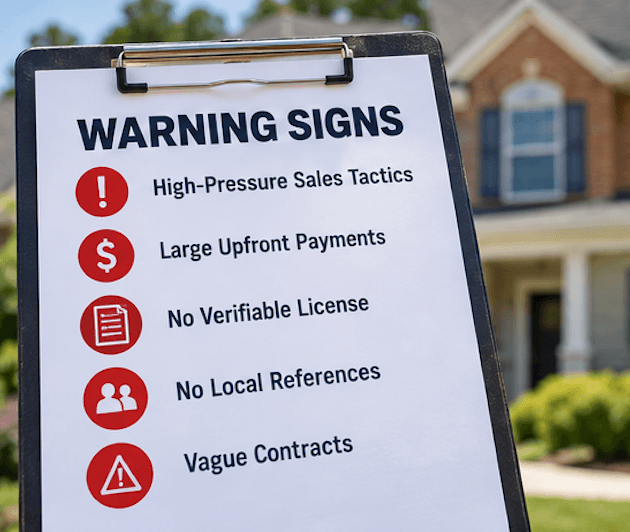 You do not need to reject every contractor who contacts you after severe weather. Instead, pay attention to how the company conducts business. Several warning signs should prompt additional research.
- High-Pressure Sales Tactics: Be cautious if a salesperson insists you sign a roofing contract immediately. Statements such as “this price is only available today” or repeated pressure to sign before getting another estimate should give you a reason to slow down.
- Large Upfront Payment Requests: Be cautious of demands for the entire project cost before work begins or requests for large cash payments without a clear written agreement. Your contract should explain the payment schedule and connect payments to specific stages of the roofing project when appropriate.
- No Verifiable Virginia Contractor License: Do not rely solely on a license number printed on a truck, business card, proposal, or website. Virginia homeowners should use the Virginia DPOR License Lookup to search for a contractor and verify licensing information.
- No Local References: Ask contractors about recent work completed in Richmond or surrounding communities. If a company claims to have operated locally for years but cannot provide evidence of previous projects, that discrepancy deserves additional investigation.
- Vague Contracts or Verbal Promises: The written agreement should clearly state what the contractor will provide. Depending on the project, this may include the roofing material, underlayment, flashing, ventilation work, tear-off requirements, disposal, cleanup, payment schedule, warranties, and other parts of the installation. If a salesperson makes an important promise, ask for it to be included in writing.
What If a Storm Chaser Offers a Lower Price?
Price matters, especially when a roof replacement involves a significant expense. However, the total at the bottom of an estimate does not tell you everything about the project. Compare roofing quotes line by line. One contractor may include complete tear-off, upgraded underlayment, new flashing, ventilation improvements, disposal, and a longer workmanship warranty. Another quote may leave several of those items unclear or list them as additional costs.
Pay attention to roofing materials, quantities, warranties, labor, cleanup, decking allowances, and any exclusions. The lowest estimate is not automatically the best value, just as the most expensive proposal does not automatically indicate better workmanship. Compare what each contractor is actually proposing to install.
What Should You Do If Someone Knocks on Your Door After a Storm?
Listen to what the contractor offers without deciding immediately. Start by getting the salesperson’s name, company name, business address, phone number, and licensing information. Research the company independently instead of relying exclusively on the information provided at your door. If you agree to a roof inspection, understand whether you are simply authorizing an inspection or signing an agreement for additional services. Before approving repairs or replacement:
- Verify the contractor’s license.
- Research the company’s history.
- Check insurance information.
- Request a written inspection report or estimate.
- Get additional estimates when practical.
- Compare the proposed scopes of work.
- Review warranties.
- Read the entire contract before signing.
If insurance is involved, keep copies of your estimates, photographs, inspection reports, contracts, and other project documentation.
Choosing a Roofer After Storm Damage in Richmond, VA
Storm damage makes a roofing project feel urgent. Some situations are urgent, especially when the roof is actively leaking or portions of the roofing system have been compromised. Even then, you can separate immediate protection from the decision to hire someone for a full replacement. Temporary measures may protect the property while you evaluate the damage and collect estimates.
When comparing roofing companies, consider licensing, insurance, experience, references, materials, workmanship, warranties, contract terms, and the contractor’s ability to provide future support. A permanent Richmond-area presence makes it easier to research a contractor before the project and contact the company after the work is complete.
Have Your Richmond Roof Inspected After a Storm
If strong winds, hail, falling branches, or severe weather have affected your Richmond property, a professional roof inspection will determine the extent of the damage. IBC Roofing inspects your roofing system, identifies visible damage, and helps determine whether individual areas are able to be repaired or whether you need more extensive work. A roof inspection will also give you better information before you make decisions about repairs, replacement, or an insurance claim.
Contact IBC Roofing to schedule a roof inspection in Richmond, VA.